Trademark Owner Has Passed Away: What Can Legal Heirs Do About the Registration?
27 November 2026
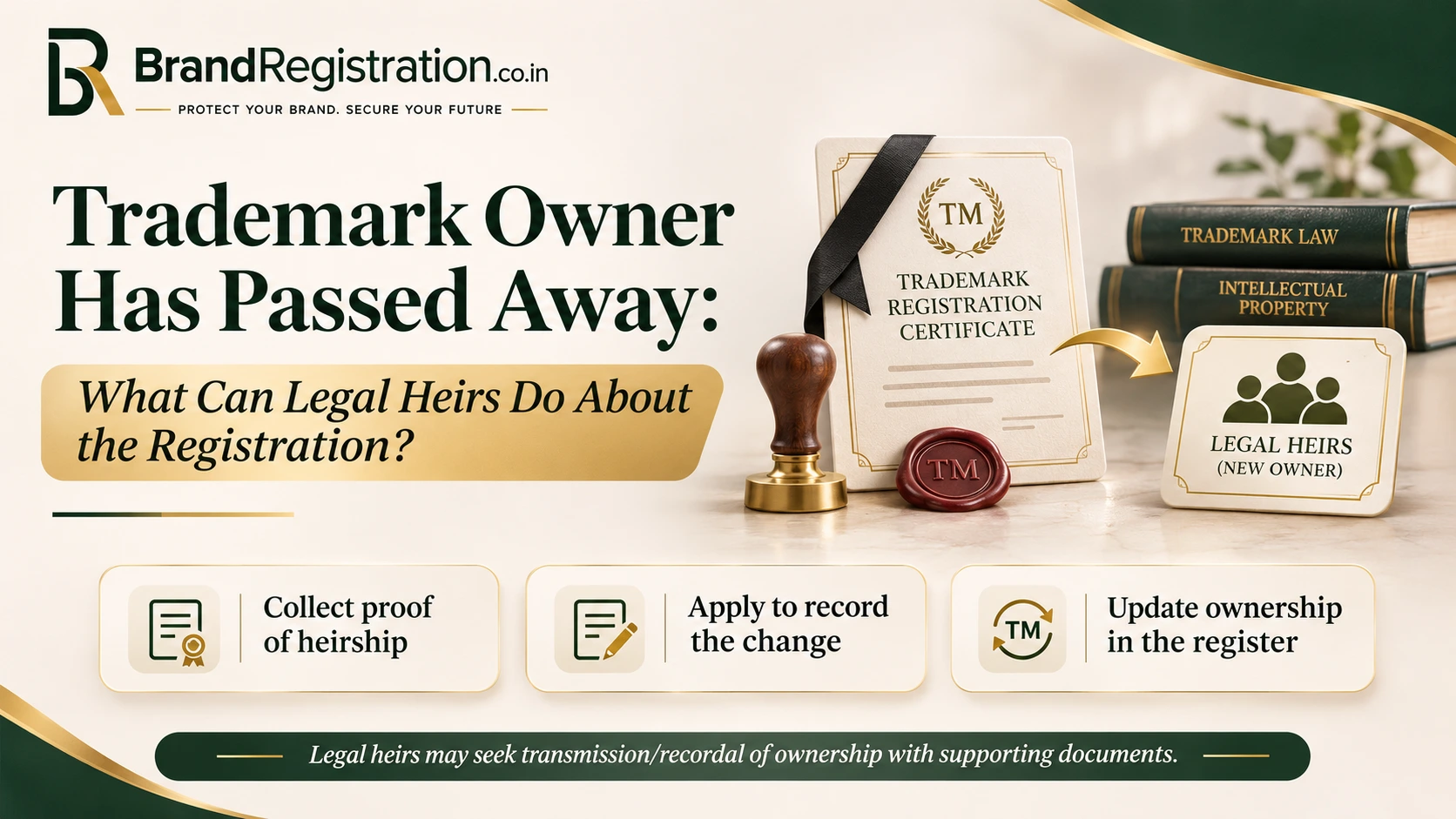
Table of Contents
A trademark transfer after death of owner begins by identifying who is entitled to the deceased person’s interest and whether the mark is registered or still an application. The successor can then ask the Trade Marks Registry to record the appropriate change, supported by evidence of death and succession. A filing receipt is not the same as an updated Registry record.
For a family business, the urgent task is to separate the brand asset from the business’s other paperwork. A shop may continue trading under the same name while its trademark record still identifies an individual who has died. This guide explains how to prepare the succession request, what costs to budget for and what to do while it is being considered.
1. Who can seek a trademark transfer after death of owner?
1.1 Start with the named owner
The relevant person is the one who held the trademark interest, not necessarily the person most closely associated with the business. An individual can own a mark personally even if a family company uses it. Conversely, the death of a founder does not by itself make a company-owned trademark an asset personally owned by that founder.
Look at the proprietor or applicant named in the trademark record and identify the legal person behind that name. A trading style and an individual’s name may appear together, so read the full entry rather than relying on the name displayed on packaging. If the record points to a firm, company or more than one person, the ownership analysis depends on that arrangement.
Identify the mark, its application or registration number and the named proprietor or applicant.
Establish whether the deceased held the interest personally or through another legal arrangement.
Determine whether the mark is registered, pending, expired or subject to another status requiring attention.
Identify the person or persons who can substantiate their entitlement to the deceased’s interest.
Consider whether anyone else claims the same interest before choosing the proposed owner.
1.2 Identify the person entitled to the interest
For trademark inheritance in India, entitlement follows the applicable succession arrangement and law; family membership alone does not answer every title question. A valid will may specify a beneficiary or deal with the relevant estate more broadly. Where there is no will, identify the people entitled under the applicable succession law and the nature of their interests.
Several relatives may be involved in running the business, but daily management and ownership are different questions. Equally, one relative’s possession of the registration certificate does not establish that the relative owns the mark. Where the estate or the scope of a bequest is disputed, the proposed filing should reflect a defensible title rather than a family assumption.
1.3 Inheritance and a later family transfer
Transmission describes a change in entitlement that occurs by operation of law, such as succession on death. Assignment generally refers to a transfer made by an act of the owner. The distinction matters when heirs want a family company to hold the mark: the company’s proposed ownership needs its own legal basis, rather than an assumption that it inherits because relatives control it.
Ask first who acquired the deceased person’s interest. Then decide whether that person or those persons intend to retain it, share it or make a separate transfer. If a company is the intended end owner, include the extra title work in the plan before instructing anyone to file.
2. Which documents help establish the succession?
The evidence should tell a coherent story: who died, which trademark interest they held and how the proposed successor became entitled to it. The list below is a preparation guide, not an official checklist that applies unchanged to every estate. The Registry’s requirements and the appropriate evidence depend on the facts and the filing route.
2.1 Identity and existing trademark records
Death certificate: establishes the death of the person whose interest is said to have passed. Obtain an official copy suitable for use with the filing.
Trademark application or registration details: identify the particular mark and Registry record. Keep the number, proprietor details, class and available certificate or filing receipt together.
Successor’s identity and address details: identify the person or entity proposed for the record and provide the details needed for future correspondence.
Existing ownership records: copies of earlier transfers or other title documents may be useful where the deceased’s connection to the current record is not straightforward.
2.2 Evidence explaining the route to ownership
A will, where relevant, helps show the basis on which a beneficiary claims the interest. Depending on the estate and applicable law, a court-issued grant or other succession-related record may also be relevant. Assemble the complete chain of documents needed to explain the claim, including any instrument that deals specifically with the brand or the business assets.
When there is no will, a trademark legal heir certificate or other evidence of family relationship may help identify relatives. It does not necessarily settle how the trademark interest is distributed or whether a particular person is entitled to the whole interest. The same caution applies to a succession certificate: its relevance depends on the nature of the estate and the legal basis of the claim.
Where multiple people have interests, a family arrangement or other relevant instrument may explain how those interests have been dealt with. Its usefulness depends on its terms and legal effect. A statement that everyone works in the business is not a substitute for evidence of who holds the trademark.
2.3 Authority to act and filing format
If a representative will file or correspond for the successor, keep the appropriate authorisation available. If a company is the proposed owner, its identity details and evidence supporting the signatory’s authority may also be needed. Provide translations or certified copies where the applicable filing requirements or the Registry call for them; keep the originals accessible.
Prepare a short title chronology for your own use: original owner, date of death, basis of succession and any later transfer. It helps the person preparing the request see whether a link in the ownership chain is missing before the claim is submitted.
3. How to prepare and file the succession request
Use the Trade Marks Registry’s services through the IP India portal. The procedure differs according to whether there is already a registered proprietor or the deceased was still an applicant. Identify the route before selecting an online filing option; a request concerning an existing registration should not be treated as a fresh application for the same brand.
Locate the record. Search or retrieve the relevant application or registration and note its current status. If the family has several marks, prepare a separate inventory rather than assuming one number covers the entire brand portfolio.
Settle the proposed ownership position. Decide whose entitlement the request will present and whether a later transfer to another person or entity is intended. Resolve any material uncertainty in the title chain before presenting it as an agreed succession.
Organise the supporting evidence. Match the evidence to the particular record and proposed successor. Keep a clear description of how the interest passed and whether the claim covers the entire interest or a specified share.
Choose the applicable Registry request. For a registered mark, use the route for recording a successor’s title. For a pending application, use the route applicable to a change in the applicant’s interest. Consult the current forms index and e-filing options on IP India for the applicable form and submission requirements.
Submit and retain the acknowledgement. Complete the requested particulars, provide the supporting material in the accepted format and pay the applicable official charge. Save the acknowledgement, submitted material and payment record with the trademark file.
Monitor the matter. Review communications and status updates, respond to any Registry request and retain the outcome. Once a change is recorded, obtain or inspect the updated record rather than relying only on the original acknowledgement.
3.1 When the application was pending at death
A pending application is not yet a registered trademark. The successor’s request concerns the applicant’s interest in that ongoing application; the application may still have examination or other proceedings to complete. “Under examination” means the application is being examined and does not itself mean registration has been granted.
Check the actual file for outstanding communications and their applicable response dates. Keep succession work and the underlying application work on separate task lists, because completing one does not automatically complete the other. If a registration was entered after the applicant died, the appropriate next step depends on the record and the circumstances.
4. What costs should the family budget for?
There is no single estate-wide price that can safely be inferred from the number of family members. The Registry charge depends on the request made and the applicable official schedule. A professional’s quote may cover only the filing, or it may also include title review and responses to later queries.
Cost component | What to identify before instructing someone |
|---|---|
Official Registry charge | The applicable filing category, channel and number of trademark records involved. |
Professional filing fee | Whether preparation, submission, monitoring and an ordinary Registry response are included. |
Estate or title work | Whether the claim needs separate succession advice, a court process or preparation of a later transfer. |
Supporting expenses | Any necessary certified copies, translations, document retrieval or other out-of-pocket work. |
The official IP India Forms & Official Fees page publishes the fee schedule and forms index. Select the entry that corresponds to the actual request and filing channel; do not substitute the price of a new trademark application for a succession-related request. This guide does not state a transmission fee because the supplied official material does not establish the applicable figure.
For a portfolio, ask for a record-by-record estimate and a clear statement of what happens if the Registry raises a query. Also separate the cost of recording an inherited interest from the cost of any later assignment. A low initial quote is less useful if it excludes work the family already knows it needs.
5. How long does a transmission take?
There are three useful milestones: readiness to file, acknowledgement of submission and an actual decision or updated entry. Only the first two are substantially within the family’s control. Submission shows that a request has been made; it does not establish that the Registry has accepted the claimed title.
Preparation may be short when the owner, successor and title documents are clear. It can take longer if the estate must be administered, several claimants need to coordinate, or records have to be obtained from different sources. An estimate for Registry processing alone would not capture that work.
After filing, the time taken can vary with the Registry’s workload, the completeness of the request and any additional information sought. The supplied official evidence does not establish a current processing benchmark for this request, so a fixed turnaround should not be assumed. Keep a dated log of submissions and communications so that follow-up is based on the actual file.
6. What can go wrong, and how can it be corrected?
The wrong person is presented as owner. A family member who manages the brand may not hold the entire inherited interest. Reconstruct the entitlement first and revise the proposed ownership position to reflect it.
The deceased never personally owned the mark. If the record belongs to a company or another arrangement, an individual succession claim may address the wrong asset. Examine the ownership structure and identify the change that is actually needed.
The title story has a gap. A request may identify the death and the desired new owner without explaining an intervening transfer or another person’s interest. Obtain the missing evidence or address the unresolved step before presenting the chain as complete.
Heirs disagree about the brand. One person may claim exclusive ownership while another says the mark belongs to the estate or is shared. A filing cannot be treated as a substitute for resolving a genuine title dispute; legal advice or an appropriate dispute-resolution route may be needed.
The family acts on a filing receipt as though the register has changed. This can create inconsistent representations to customers or counterparties. Describe the request accurately as pending until the record or decision supports the updated claim.
Only one record is considered. A word mark, logo or related brand may have separate records. Build a portfolio inventory and assess the title and status of each rather than assuming that one request changes all of them.
A dispute over who owns the mark is different from a routine administrative query. Avoid presenting a contested family position as an agreed transfer; doing so can create further work and expense without resolving the underlying claim.
7. What should the successor do after the record is updated?
7.1 Renewal and the public record
Review the updated proprietor details and address for service against the decision or entry. Keep the evidence of succession, acknowledgement and final record together so the next person managing the portfolio can understand the ownership history.
Trademark renewal after death of the proprietor is a separate maintenance issue from recording succession. Check the renewal position and any relevant notices for each registration; do not assume that an ownership request has renewed the mark. Where a deadline is close or the record shows an adverse status, address that issue promptly under the applicable Registry procedure.
7.2 Commercial and enforcement records
Update the internal brand register to show who can make decisions about licences, enforcement and future transfers. Review existing licence or distribution documents before changing commercial arrangements: the trademark entry and the parties’ contractual rights are related, but they are not the same record.
Keep evidence of how the mark is used and by whom, including dated packaging, invoices and relevant permissions. If another business is using a confusingly similar sign, organise the ownership and use records before deciding how to respond. Recording the successor’s name is one part of managing the asset, not a substitute for monitoring the market.
A company name and a brand name can be different. If the family also wants to protect a new business name, first assess whether it is already covered by an existing mark and the relevant goods or services. A new application is a separate matter from succession; Brand Registration’s Trademark Registration service covers that broader filing need.
8. Choose your next three actions
Pull the record: identify each relevant mark, its named owner and its current status.
Map the title: decide who can substantiate the inherited interest and whether a separate transfer is intended. If relatives dispute ownership, address that issue before treating the filing as routine.
Prepare the request: assemble the evidence, identify the applicable Registry route and obtain a cost estimate that separates official charges from professional and estate work.
Begin the process online via the official government portal, or engage Brand Registration for end-to-end assistance
Frequently Asked Questions
Does a trademark registration end when its owner dies?
The owner's death does not by itself answer the registration's status or change the proprietor shown on the record. The successor should identify the entitlement and seek the appropriate Registry entry, while separately checking renewal and any other outstanding matters.
Can a trademark pass to heirs without a will?
An interest can pass through succession without a will. Who is entitled and in what share depends on the applicable succession law and the facts of the estate.
Is a legal heir certificate always enough to establish trademark ownership?
No. It may help establish family relationships, but the evidence must also explain the proposed successor's entitlement to the trademark interest. The documents needed depend on the circumstances.
Can the family put the trademark directly in its company name?
A company does not inherit a personally owned mark merely because the deceased person's relatives control it. Establish who acquired the interest and the legal basis for any proposed transfer to the company.
What happens if the application was pending when the owner died?
The successor needs to address the applicant's interest in the pending application through the applicable Registry procedure. The underlying application may still require examination or other action before registration.
Do all heirs have to agree before a succession request is made?
The answer depends on who is entitled and the nature of the claim. If relatives dispute ownership, an application should not portray the position as agreed when it is not; the underlying dispute may need separate legal attention.
Does filing a succession request renew the trademark?
No. Recording a change in ownership and renewing a registration are separate matters. Check the renewal position and applicable notices for each registered mark.
How can heirs check the official fee for their case?
Use the IP India Forms & Official Fees page and identify the entry corresponding to the actual request and filing channel. A professional's fee and any estate-related expenses are separate from the official Registry charge.