Changed Your Logo After Trademark Registration? Do You Need a New Application?
26 November 2026
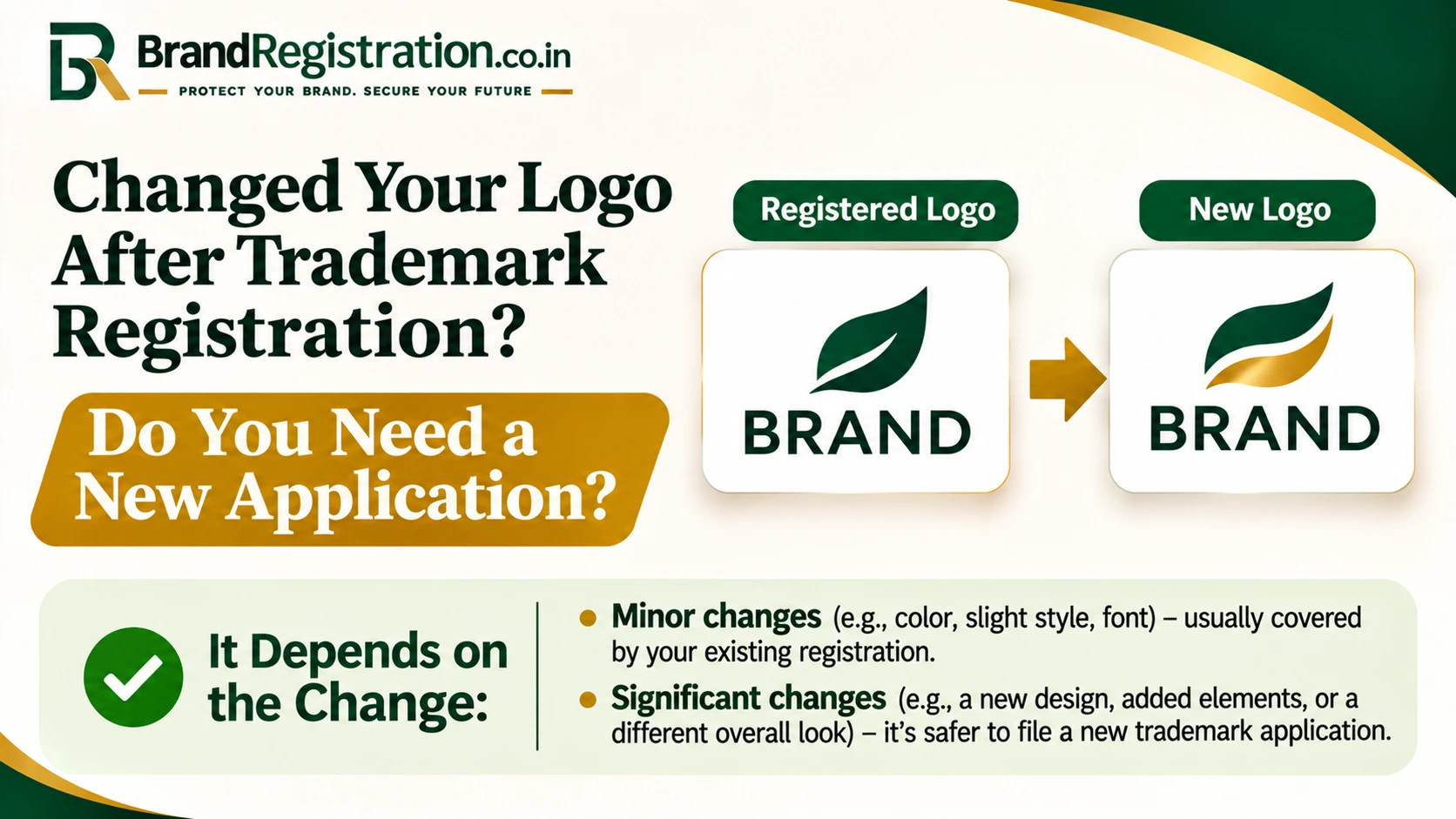
Table of Contents
If you change a logo after trademark registration, a substantial redesign generally calls for a fresh application if you want registration for the updated design. A smaller change may warrant an assessment under Section 59 of the Trade Marks Act, 1999; the existing registration does not automatically become a registration for every later version.
Your old registration and your new artwork are separate assets. Before spending on a filing, compare the registered image with the version customers will see, decide which elements need protection, and check whether the proprietor and business activities remain the same.
1. How to change logo after trademark registration: choose the right route
1.1 Compare what changed
Put the image on your registration certificate beside the final proposed logo. Look at the name, lettering, icon, arrangement and colours together. A small adjustment to one element can still alter the overall impression, while a change that looks conspicuous on a screen may have a different effect when viewed in context.
Situation | Route to consider | Decision point |
|---|---|---|
You continue to use the registered logo without changing it. | Maintain the existing registration. | There may be no new design to register. |
You have made a limited change to the registered image. | Assess whether alteration of the registered trademark is available. | Section 59 is relevant; the route should not be assumed to cover every edit. |
The redesign changes the brand’s visual identity substantially. | Consider a fresh application for the new logo. | A fresh filing gives the Registry a defined version of the redesigned mark to assess. |
Section 59 addresses alteration of a registered trademark. The supplied official fee material does not establish the current alteration form, charge or the detailed conditions for acceptance, so those details are not treated as settled here. A business considering that route should obtain a focused assessment of the actual old and new representations before choosing it.
1.2 What the existing registration covers
Changing your artwork does not by itself erase the old registration. Equally, the certificate for the old design should not be treated as a certificate depicting the new design. The extent to which the old rights help against a particular use depends on the marks, goods or services and other circumstances.
A new application is therefore a protection decision, not an instruction to discard the existing record. During a rebrand, you may have old stock, packaging, signage or online material carrying the earlier mark. Keep that commercial transition in view when deciding whether to maintain both versions.
2. Eligibility and checks before you commit to a route
2.1 Who should make the decision
Start with the registered proprietor shown on the existing record. A founder, designer, group company and trading business can all be involved in a brand, but they are not necessarily the same legal person. Identify who owns the current registration and who will own and use the redesigned mark.
A company name and a brand name can be different. For example, a company may trade using a distinctive product name that is not part of its legal name. The relevant question for the filing is which legal person is claiming the mark, not whether its corporate name matches the words in the logo.
Where a business has been sold or reorganised, work out who is entitled to make the application or request before proceeding. A change to proprietor information is a separate issue from changing the image of the mark; one should not be assumed to accomplish the other.
2.2 Test the new identity and its market
A trademark can include a visual device or a combination of words and design used to distinguish goods or services. For a redesigned logo, decide whether the icon will appear alone, whether the name will appear alone, and whether the combined image will be the main customer-facing mark. Those choices affect what you may want to protect.
Compare the goods and services covered by the old registration with the business’s current and planned activities. Do not assume that an old filing automatically covers every new offering simply because the brand name remains familiar. Describe the actual activity before choosing a class or specification.
A trademark logo colour change or font change needs the same comparison with the registered representation. There is no useful universal rule that every colour edit is harmless or every font edit requires a new filing: the registered mark, any relevant limitations and the proposed use matter. The more the change alters the identity customers encounter, the stronger the reason to assess a fresh filing.
Also consider whether the new design is ready to be used consistently. Filing a draft while the creative team is still changing the icon or spelling can leave the business paying to protect an image it never adopts. Agree on the intended version and where it will appear before moving to submission.
3. Documents and information to prepare
The list below combines useful preparation material with information needed to make a considered filing. It is not a claim that every item is a compulsory attachment in every case. The application route and circumstances determine which supporting material is needed.
Existing registration details: Keep the registration number and a copy or accurate representation of the registered mark. These identify the record being compared and help establish the proprietor and existing scope.
Final new logo: Prepare a clear digital image of the exact design to be applied for. Use a version that shows the intended lettering, layout and visual elements without relying on a later description to repair an unclear image.
Applicant particulars: Assemble the legal name, address and entity details of the person or organisation applying. Their purpose is to identify the prospective proprietor accurately.
Goods and services list: Write a specific description of the products or services for which protection is sought. Organise the list by relevant class so the application and budget can be planned.
Use information: Note whether the new logo has already been used and retain reliable records of that use. Dated material can help support a user claim if one is made; the old logo’s history should not automatically be assigned to a different image.
Supporting status material: If claiming the fee category for a startup or small enterprise, assemble evidence supporting the category. Its purpose is to support the applicant’s stated entitlement to the relevant rate.
Representation authority: If an agent acts for the applicant, prepare the applicable authorisation material. It establishes the agent’s authority to represent the applicant where required.
Design ownership records: Retain the designer’s contract and any relevant rights documents. These help the business understand whether it has the rights needed to use and control the artwork.
For an alteration assessment, a side-by-side comparison is especially useful: include the original representation, the proposed version and a short description of each change. That comparison is a practical working document, rather than a substitute for the Registry’s prescribed application material.
4. Step-by-step: prepare, submit and monitor
4.1 Preparation
Search before treating the new design as cleared. A redesign can introduce a symbol, word or visual arrangement that resembles another trader’s mark even when the previous logo was used for years. Use the IP India trademark search facility to investigate relevant names and visual elements, and assess the results in the context of the goods or services.
A useful search considers similar-sounding or similarly spelled names as well as the exact wording. For the graphic element, look beyond an identical image: a similar visual idea used for related activities may deserve attention. Search results help inform the decision; they do not guarantee acceptance or resolve every possible dispute.
4.2 Submission
Choose the filing route. For a fresh registration of the redesigned logo, use Form TM-A. If you are considering alteration of the existing registration instead, first obtain a route-specific assessment rather than treating a fresh application as an amendment.
Open the official channel. Access trademark e-filing through IP India and use the relevant applicant or authorised-agent account. The online channel is separate from the public search facility.
Enter the application details. Identify the applicant, mark and relevant goods or services. Select the applicable class or classes and enter the user information that can be supported for the mark being filed.
Review the representation and selections. Before submission, compare the displayed image and entered particulars with the approved filing instructions. A final review should include every class and the precise mark version.
Submit and retain the filing record. Pay the applicable government fee through the available filing channel, then save the acknowledgement and application number for tracking.
Monitor the application. Review the application status and official communications. If the Registry raises an objection or another issue arises, identify the issue and respond through the applicable procedure.
For businesses that prefer assistance with the search, filing or later communications, Brand Registration offers Trademark Registration support. Agree on who is responsible for monitoring and responding after the initial submission, not only who will upload the application.
4.3 Post-submission
For a logo or other figurative mark, the Registry’s handling can include classification of visual elements using the Vienna Classification. This helps organise figurative features for examination and searching. It is not a separate grant of rights in each feature.
Examination may address whether the mark is distinctive and whether it conflicts with earlier marks. Acceptance is not automatic merely because an older version was registered: the new representation is assessed as the subject of the fresh application.
5. Government fees and professional costs
5.1 Fresh application charges
IP India’s published First Schedule to the Trade Marks Rules, 2017 lists the following TM-A application fees. The fee applies for each mark and each class. These are government filing charges, not a complete quote for a professional service.
Applicant category | E-filing, per mark per class | Physical filing, per mark per class |
|---|---|---|
Individual, startup or small enterprise | ₹4,500 | ₹5,000 |
All other applicants | ₹9,000 | ₹10,000 |
For example, an eligible small enterprise filing one logo electronically in two classes would calculate the listed government filing fee as ₹4,500 multiplied by two, or ₹9,000. Filing a separate word mark as well would add another mark-class calculation. The applicable applicant category must be established; incorporation alone does not explain which row applies.
5.2 Build a full budget
Ask for an itemised professional quote covering the work you actually need. Search and advice, preparing and filing the application, responding to an examination objection, attending a hearing and handling an opposition can be priced separately. A low initial filing quote may not include work that becomes necessary later.
For a trademark logo alteration fee, the supplied official extract does not establish the current charge or form. Do not use the TM-A figures as if they were alteration charges. When comparing routes, obtain the applicable official charge and a separate professional quote for the proposed alteration work.
6. Timeline: what happens while the Registry considers the filing
6.1 Milestones
After submission, the application moves through Registry processing and examination. An “under examination” status means the application is being examined; it does not mean the logo is registered or that an objection has necessarily been resolved.
An application that proceeds towards registration may be advertised in the Trade Marks Journal, giving others an opportunity to oppose it. If an opposition or objection arises, additional exchanges or a hearing may be needed. Registration follows the applicable process; the filing acknowledgement is not the registration certificate.
6.2 What changes the wait
The time taken can differ with Registry workload, the issues raised during examination, the applicant’s response and any third-party opposition. A visual mark’s classification and the need to consider earlier similar marks can add work to the assessment. A straightforward file and a contested file should not be given the same delivery forecast.
No reliable current processing benchmark is supplied for either a fresh logo application or a Section 59 alteration. Plan launch and packaging decisions without assuming a fixed registration date. Track the actual application record and keep the people responsible for responses available as the matter progresses.
7. Mistakes that create avoidable exposure
Applying for an unfinished design. If the team later replaces the icon or lettering, the application may no longer match the identity being launched. Freeze the version for filing and document any later change as a separate decision.
Searching only the old brand name. A new symbol or revised word can create a different conflict. Expand the search to the actual new elements and relevant market before committing to production.
Choosing a class from its title alone. A broad label may not describe the activity the business actually performs. Prepare a precise goods or services list and review the class selection against that list before submission.
Copying an unsupported use claim. The date on which the earlier logo was first used is not necessarily the date on which the redesigned logo was used. Base any claim on the mark and use that can be substantiated.
Missing a Registry communication. An objection or other notice can require action; leaving it unattended can prejudice the application. Assign one person to monitor the record and maintain a calendar for the deadlines stated in communications.
Treating a proprietor update as a redesign approval. Updating who owns a registration and seeking protection for changed artwork are different matters. Identify which record needs updating and which mark needs protection before instructing a filing.
Do not assume that a filed application authorises use of a logo against every competing claim. A search, an application and a registration each serve different purposes; none makes a third-party dispute impossible.
8. Protect the name, design and old identity
8.1 Word mark versus logo
A word mark and a logo mark answer different commercial needs. A word-mark application focuses on the name as words; a logo application focuses on the visual representation filed. A business that changes its visual style regularly may value protection for a stable name as well as protection for a distinctive design.
If you want to trademark a business name, identify the intended proprietor and the goods or services, search the name and consider a separate application for the words. A registration of a combined name-and-logo design should not automatically be treated as a separate registration of the name alone. The distinctiveness of the name and the scope of the actual registration remain important.
Consider how the brand is encountered. An app icon displayed without text, a name spoken by customers, and a combined label on a product each expose a different element. Filing choices can be prioritised around the element that is commercially significant, while recognising that separate filings increase cost.
8.2 Rights in the artwork
Trademark protection and rights in the underlying artwork are different questions. A designer may have created the visual work, while the business intends to use it as a brand. Read the contract to understand what rights were granted or transferred and whether those rights fit the intended uses, including packaging, advertising and digital applications.
Do not assume that paying for a design automatically answers every ownership question. If the business expects exclusive control or plans to license the brand, resolve the contractual position with the creator. Copyright registration is a separate subject from trademark registration; obtaining one should not be presented as a substitute for the other.
9. After registration: maintain a usable portfolio
9.1 Monitor each record
Keep the certificate, application details and correspondence for each registered mark together. Record the proprietor, the image, the covered goods or services and the renewal details shown for each record. A portfolio can contain an old logo, a new logo and a word mark, each with its own scope and administrative history.
Renewal and changes to ownership details require attention after registration. Assign responsibility for tracking dates and Registry communications, particularly when a business changes its legal structure or correspondence address. Do not assume that maintaining one record maintains every other registration in the portfolio.
9.2 Manage the transition
Decide where the old logo will remain in use and for how long: existing stock, distributor materials, archived websites and physical signs may change at different speeds. Retain dated examples of actual use and a record of the rollout. This makes it easier to distinguish a deliberate transition from an accidental mix of designs.
Before allowing an older registration to lapse or deciding it has no further value, consider remaining stock, legacy customer recognition and any continuing use by licensees or distributors. Continued maintenance has a cost, but abandoning a useful record can also have consequences. The decision should reflect the business’s actual use and portfolio strategy.
10. Your next three actions
Place the registered image beside the approved redesign and identify whether the issue is a limited alteration, a materially new identity, or simply a change in proprietor details.
List the name, icon and goods or services that matter to the launch; search the proposed identity and prepare the relevant filing material and budget.
Choose who will file and monitor the matter. If the alteration route or ownership position is uncertain, obtain a focused assessment before committing to a form.
Begin the process online via the official government portal, or engage Brand Registration for end-to-end assistance
Frequently Asked Questions
Does changing my logo automatically cancel the old trademark registration?
No. A redesign does not by itself erase the old registration. The existing record and the redesigned logo should be assessed separately, including whether the business still uses and wants to maintain the old mark.
Can a minor logo change be assessed under Section 59?
Section 59 of the Trade Marks Act, 1999 addresses alteration of a registered trademark. Whether a particular change can use that route requires assessment of the registered mark, the proposed alteration and the applicable legal conditions.
Does a colour or font change always need a new application?
Not necessarily. Compare the registered representation, any relevant limitations and the proposed design. A change that creates a materially different identity gives the business a stronger reason to consider a fresh application.
Which form is used for a fresh application for the redesigned logo?
Form TM-A is used to apply for a fresh trademark registration. It is different from a request to alter an existing registration.
What is the government fee for filing a new logo online?
The published TM-A e-filing fee is ₹4,500 per mark per class for an individual, startup or small enterprise and ₹9,000 per mark per class for other applicants. Professional charges are separate.
What does under examination mean in a trademark application?
It means the application is being examined by the Registry. It does not mean the mark has been registered, and an objection may still need to be addressed.
Can my company name and brand name be different?
Yes. A company can use a brand name that differs from its legal name. The application should identify the correct legal applicant and the mark for which protection is sought.
Does a word mark replace registration of my redesigned logo?
A word mark and a logo mark protect different subject matter. A word-mark application focuses on the name as words, while a logo application concerns the visual representation filed. A business may consider either or both according to its brand and budget.